Solitaire 2026
- 4.7
- Rating
- 500.00K
- Installs
- Free
- Price
 Analysis by App-foxy
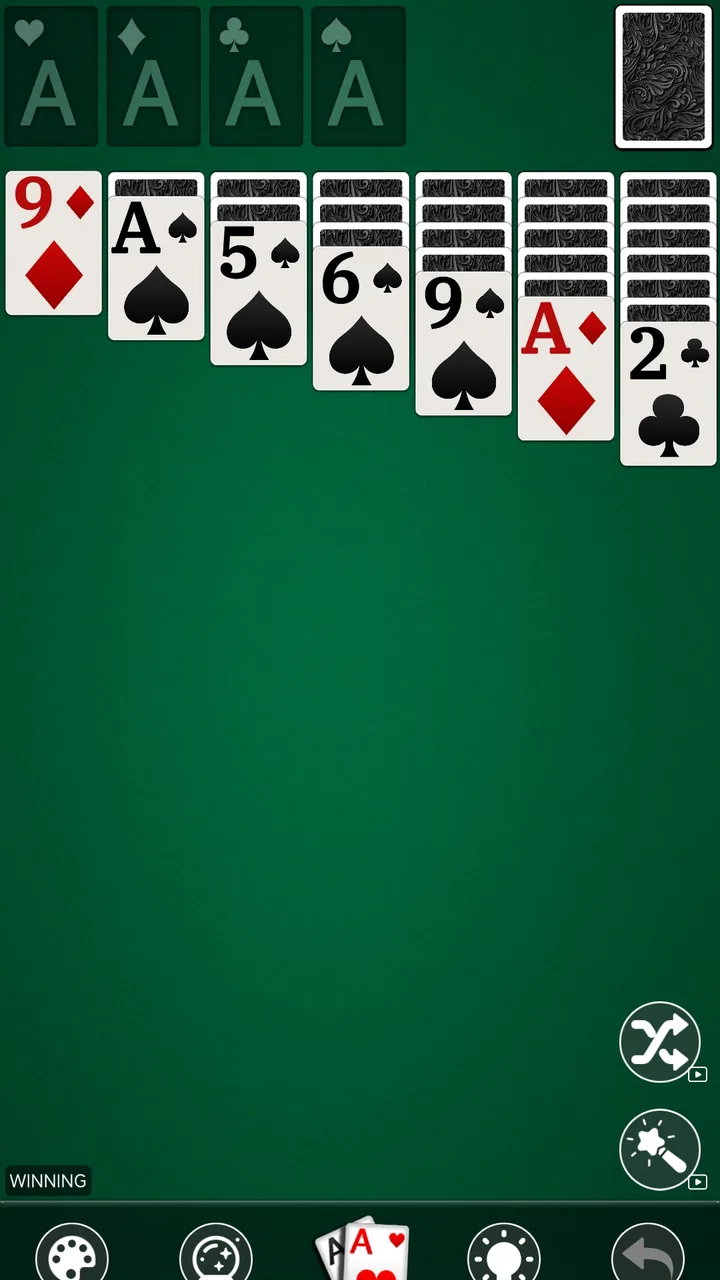
Solitaire 2026 is the kind of card game I open when I want something familiar, quiet, and easy to leave after a few minutes. It is a free solitaire game from Standard Puzzle, aimed at Everyone, and its appeal comes from keeping the classic card-table idea approachable rather than turning it into a complicated challenge. I found it most comfortable in short sessions: a quick round while waiting, a few hands before bed, or a relaxed break when I do not want a demanding game.
That simplicity is important because solitaire apps can easily become cluttered with missions, currencies, timers, and constant pressure to keep playing. This one presents itself as a modern take on a relaxing classic, and the experience is strongest when I treat it that way. It is not the right choice for someone searching for a deep competitive card platform, but it can suit players who want a straightforward way to play solitaire on a phone.
How the classic card experience feels in everyday use
I find the everyday appeal of a classic card game comes down to whether it fits the gaps in my day without demanding more attention than I want to give. In the next section, I’ll look at the practical feel of playing on a phone and the small choices that can make a short session more satisfying.
You May Also Like

 Blood Strike: 2.5 Anniversary
Blood Strike’s Loadouts Turn Every Drop Into a Tactical Gamble
A close look at Blood Strike’s custom loadouts: how fast access to signature weapons reshapes its battle royale rhythm, rewards preparation, and narrows the gap between fights.

 Pandora - Music & Podcasts
Pandora’s Music Is Easy to Start, but Harder to Recover
Pandora’s strength is its low-effort path from a seed to a station. Its weak spot is how much confidence it asks you to place in connection, setup, and quiet recovery.

 8 Ball Pool
 Is Built on Rivalries, Rematches, and Routine
A close look at the rivalries, rematches, shared routines, and unanswered safety questions that turn a quick pool match into a persistent mobile community.

 Samsung Music
’s Quiet Strength Is Playing What You Already Own
Its reach comes less from spectacle than from dependable access to a personal library. That simplicity is both the app’s strongest retention engine and its ceiling.

 AccuWeather: Weather Radar
AccuWeather Review: A Quick, Clear Forecast for Everyday Decisions
For everyday plans, the best forecast is the one you can understand quickly. AccuWeather makes rain timing, radar, and local conditions easy to act on, with a few trade-offs.

 Hill Climb Racing
Why Hill Climb Racing Still Turns Crashes Into One More Run
A tiny car, a bumpy hill and one more upgrade: Hill Climb Racing keeps resurfacing because its simple chaos makes every near-miss feel personal.
More From Our News Desk



A familiar starting point for casual players
The main advantage is that I do not need to learn a new ruleset before beginning. Solitaire remains recognizable, which makes the game suitable for people who already know the basic flow and for newcomers who want a gentle introduction to card games. The age rating of Everyone also fits that broad accessibility. I would be comfortable suggesting it to a family member who wants a simple game rather than a fast action title or a social app.
In a realistic everyday situation, I might open it during a short train ride with only a few minutes available. A solitaire hand works well in that setting because the game naturally breaks into small decisions: move a card, expose a hidden card, reconsider the order, and decide whether to draw again. I do not have to coordinate with another player or remember a long storyline. If I need to stop suddenly, the session has not demanded the kind of attention that a multiplayer match would.
That same structure makes it useful for winding down. I can focus on arranging the tableau and let the repetitive rhythm fill a quiet gap. The game does not need to be exciting in the usual sense. Its value is closer to a small mental reset, especially for players who enjoy pattern recognition and light planning.
Where the modern presentation helps, and where it matters less
The “2026” label gives the game a current identity, but the underlying attraction is still the classic card format. I would not choose it because of the name alone. I would choose it because a familiar solitaire layout is easier to return to than a game that asks me to follow a complicated progression system.
One useful habit is to decide what kind of session I want before starting. If I have only a moment, I play for the process rather than insisting on completing a hand. If I have more time, I slow down and examine the available moves instead of tapping quickly. This small change prevents the game from feeling like a test of speed. It also makes the experience more relaxing, which is the reason this particular style of solitaire appeals to me.
The current version is 1.952, so the app is presented as an actively numbered modern release rather than an old, abandoned card program. It supports a minimum operating system of 9, which is helpful for people using older compatible devices. I still recommend checking the device requirement before downloading, particularly if the phone has not been updated for a long time.
What progress feels like without turning the game into work
Solitaire naturally provides a sense of progress inside each hand. Exposing a hidden card, creating a useful sequence, or clearing part of the tableau gives me a small reason to continue. That is enough for casual play, but it is also where the experience can become repetitive. Players who need a strong long-term progression system may find the card-by-card satisfaction too limited.
I prefer not to treat every difficult hand as a personal failure. Solitaire involves planning, but the available cards can still make a round awkward. When I get stuck, restarting immediately is not always the best response. I first review whether I moved a low card too early, blocked a needed color, or used a useful empty space without considering the next sequence. This turns a frustrating round into a small strategy exercise.
A practical technique is to preserve flexibility. I try to reveal hidden cards when possible, but I avoid making a move merely because it is legal. Moving a card can open one path while closing another, so I look at the cards underneath and at the spaces that may become available. This is a more rewarding way to play than tapping through obvious moves and hoping the layout solves itself.
Pressure, repetition, and the way I manage them
The biggest limitation for me is not the basic card format; it is the possibility that repeated hands begin to feel similar. A player who enjoys solitaire as a calming routine may see that repetition as a benefit. Someone who wants constant novelty may not. The app works best when I use it as a short, optional activity rather than as the only game on my phone.
I also think about pressure when a game encourages me to keep going. The verified purchase information establishes that Solitaire 2026 is free, but it does not establish a complete picture of optional purchases or how any spending might affect play. I therefore would not promise that the experience is entirely free of commercial prompts. Before committing time or money, I would inspect the app’s current purchase information on the relevant platform and avoid assuming that “free” answers every spending question.
This distinction matters. Free to download is useful for trying a game without an initial payment, but it is not the same as knowing every possible purchase arrangement. My own approach is simple: I begin without spending, see whether the core card experience is satisfying, and treat any later purchase as optional rather than necessary. If a player dislikes any form of commercial interruption, that person should check the live store and in-app presentation first.
Fairness in a game that is mostly about personal decisions
Solitaire is naturally more personal than competitive. I am generally playing against the layout and my own choices, not against another person waiting for a result. That makes the game less vulnerable to the usual concerns about matchmaking, rankings, or opponents paying for an advantage. For a quiet solo experience, this is a genuine strength.
At the same time, I would be careful about using the word “fair” too broadly. A solitaire round can feel fair in the sense that it gives me a consistent set of rules, but the quality of a hand depends on the arrangement of cards and on the decisions I make. Without a clear competitive structure, fairness is better judged by whether the game lets me understand my choices than by whether every hand is easy to win.
My preferred way to judge it is to watch for pressure rather than assume it. If I can play patiently, learn from mistakes, and stop without feeling punished, the format remains comfortable. If the surrounding experience pushes me toward repeated attempts or spending, that changes the balance. Since those details can vary by the current version and platform, I would make the decision based on what appears on my own device rather than on a general promise.
How it compares with other solitaire choices
Compared with a physical deck, this game is more convenient. I do not need a table, a deck that has not lost cards, or enough space to lay out the tableau. The phone handles the arrangement, which makes a quick session possible almost anywhere. The trade-off is that a digital version cannot provide the same tactile feeling as moving real cards across a table.
Compared with a feature-heavy solitaire app, Solitaire 2026 may appeal more to someone who wants less mental overhead. Large collections of modes, daily tasks, statistics, themes, and social systems can be enjoyable, but they can also make a simple card game feel like a checklist. I would choose a more elaborate alternative if I wanted extensive customization, a strong achievement system, or a community around the game.
Compared with an offline card deck, a phone app may also be less predictable in its surrounding experience because updates and store policies can change. That is why I see this title as a convenient casual option, not as a permanent replacement for every form of solitaire. It is best for accessibility and quick access, while a traditional deck remains better for a screen-free routine.
Who should try it, and who should skip it
I think Solitaire 2026 is a good fit for a player who already enjoys classic solitaire, wants a free starting point, and prefers short solo sessions. It also suits someone introducing a child or older relative to a simple card game, provided the device is compatible and the adult checks the current store and purchase presentation.
I would be less likely to recommend it to a player who needs competitive multiplayer, a detailed campaign, or a clearly documented rewards economy. It is also not ideal for anyone who finds repeated card layouts boring after a few sessions. In that case, a broader card collection or a physical deck may offer more variety.
The app has reached over one hundred thousand installs and holds a 4.7 average from around 4.8 thousand ratings, with 199 written reviews. Those figures suggest that many people have found the basic experience appealing, but they do not replace personal testing. Ratings are especially limited when the decision depends on tolerance for ads, purchase prompts, repetition, or the exact feel of a particular device.
What I would check before settling in
Before making it a regular game, I would play several hands in different situations: one quick session, one slower session, and one round after making a mistake. That tells me more than a single successful hand. I would also check whether the controls feel comfortable on my screen, whether I can easily recognize card colors and ranks, and whether the game remains pleasant when I do not win.
I would also confirm the current store details for my platform. The game is free and rated for Everyone, but spending preferences differ from person to person. If I am setting it up for a child, I would use the device’s purchase controls and review the available settings rather than relying on the age rating alone. The rating describes suitability, not every aspect of how a store or device handles purchases.
Another useful check is whether the app fits my intended routine. If I want a five-minute distraction, a solitaire game is naturally suitable. If I want a game that rewards long-term mastery, I need to see whether the available experience offers enough depth for me. I would not install it expecting a strategy campaign; I would install it expecting a familiar card puzzle that can be picked up and put down easily.
My trust verdict on the free download
My overall view is positive but measured. Solitaire 2026 does the most important thing well for its audience: it offers an accessible way to return to a classic card game without demanding a large time commitment. Standard Puzzle has positioned it as a relaxing, modern solitaire choice, and the combination of a free price, Everyone rating, and broad device support makes it easy to consider.
Still, I would keep expectations realistic. The game’s strongest qualities are convenience, familiarity, and quiet solo play, not guaranteed novelty or competitive depth. I would also avoid assuming that free means every future part of the experience is free, since the available purchase details should be checked directly before spending.
My recommendation is to try it when you want a simple card break, not when you are searching for a full-featured gaming hobby. Start with a few hands, play patiently, and judge whether the layout and surrounding experience feel comfortable on your phone. For that specific use, it is an easy game to recommend to a friend who enjoys classic solitaire and wants a low-commitment option.
FAQs for Solitaire 2026
01What makes Solitaire 2026 different from other solitaire games?
Solitaire 2026 stands out with its modern interface and unique customization options. It offers a variety of themes and card designs, allowing users to personalize their gaming experience. Additionally, it includes daily challenges and new game modes that keep the gameplay fresh and engaging for both new and seasoned players.
02Is Solitaire 2026 free to play, or are there in-app purchases?
While Solitaire 2026 is free to download and play, it does offer in-app purchases. These purchases can enhance your experience by unlocking additional themes, removing ads, or providing extra hints. However, the core game remains fully accessible without spending any money, making it enjoyable for players who prefer not to make purchases.
03Can I play Solitaire 2026 offline?
Yes, Solitaire 2026 can be played offline, allowing you to enjoy the game without an internet connection. This makes it perfect for long commutes or when you’re in areas with limited connectivity. However, some features like daily challenges or leaderboards may require an internet connection to access.
04What are the system requirements for installing Solitaire 2026?
Solitaire 2026 is compatible with both Android and iOS devices. For Android, it requires version 5.0 or higher, while iOS users need version 10.0 or later. The game is optimized for both smartphones and tablets, ensuring a smooth gameplay experience across various devices.
05Does Solitaire 2026 include any social or multiplayer features?
Solitaire 2026 includes social features such as leaderboards and the ability to share your scores with friends. While it doesn’t offer direct multiplayer gameplay, these features allow you to compete with others and see how you rank globally, adding a social element to the classic solitaire experience.
Pros
- Intuitive interface with easy navigation.
- Wide variety of Solitaire game modes.
- Daily challenges keep gameplay fresh.
- Offline play available for convenience.
- Minimal ads enhance user experience.
Cons
- Limited customization options.
- Occasional slow loading times.
- In-app purchases can be pricey.
- No multiplayer or social features.
- Graphics could be more modern.

Solitaire 2026
Gallery